
Summary
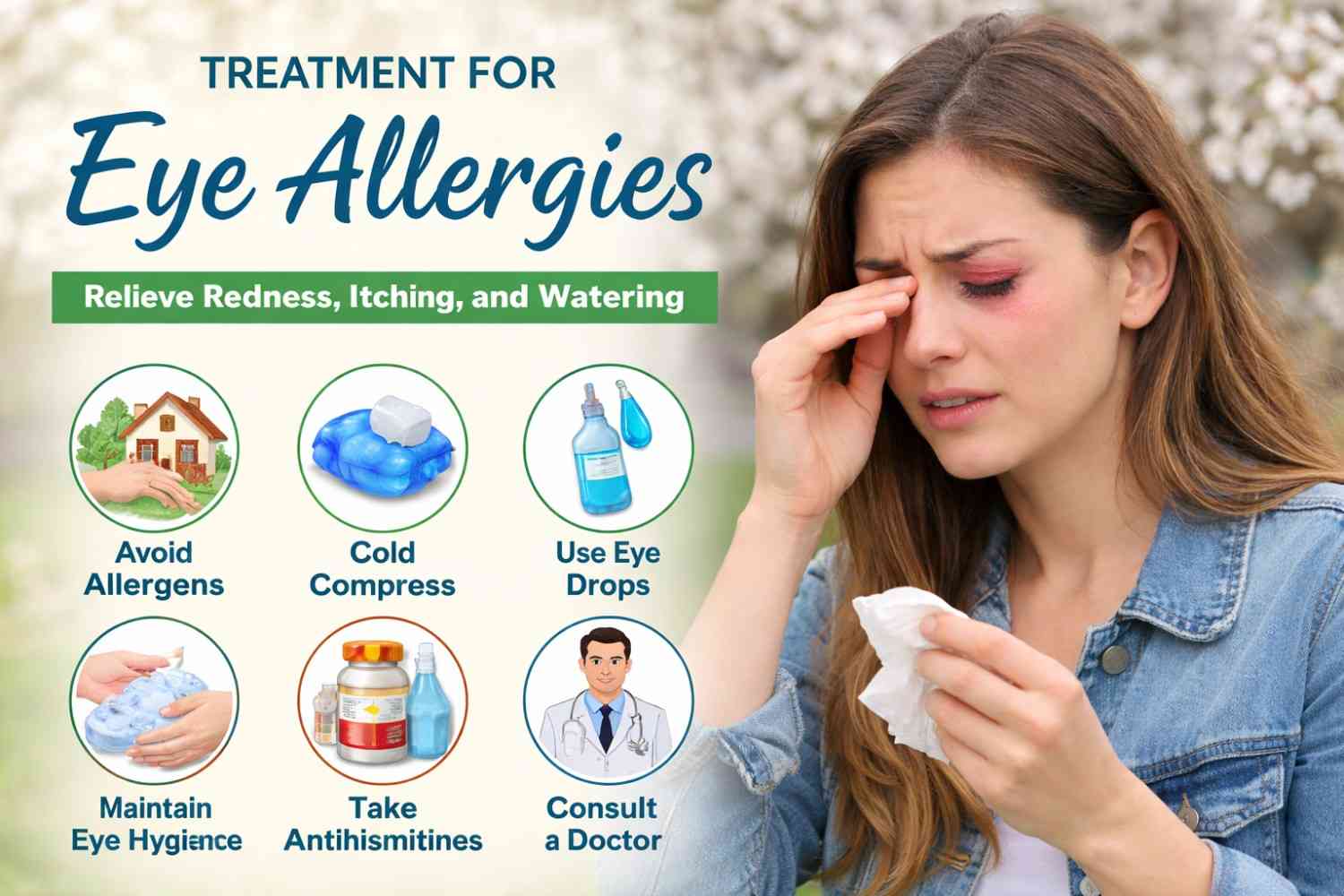
Treatment for Eye Allergies focuses on reducing irritation, controlling allergic reactions, and preventing long-term eye damage caused by allergens such as pollen, dust, smoke, and pet dander. Eye allergies occur when the immune system releases histamine, leading to itching, redness, watering, and swelling. Effective management includes avoiding triggers, maintaining proper eye hygiene, using artificial tears, antihistamine or prescribed eye drops, and adopting healthy lifestyle habits. Cold compresses, oral allergy medicines, and professional eye consultations further help control symptoms. With timely care and preventive measures, eye allergy symptoms can be managed safely, reducing the risk of chronic complications and protecting overall eye health.
Complete Guide to Treating Eye Allergies
Eye allergies are a common condition that affects millions of people worldwide, especially during seasonal changes. Treatment for eye allergies focuses on reducing irritation, controlling allergic reactions, and protecting the eyes from long-term damage. Eye allergies usually occur when the immune system reacts to allergens such as pollen, dust mites, pet dander, smoke, or mold spores. These allergens trigger the release of histamine, causing redness, itching, and watery eyes. With proper care, lifestyle adjustments, and medical support, eye allergy symptoms can be managed effectively and safely.
What Causes Eye Allergies and Why They Happen
Eye allergies happen when allergens come into contact with the eye’s surface and trigger an immune response. The body mistakenly identifies harmless substances as harmful and releases chemicals like histamine. Common causes include seasonal pollen, air pollution, cosmetics, contact lenses, and indoor allergens. Genetic factors also increase the risk, especially for people with asthma or allergic rhinitis.
Common Symptoms of Eye Allergies You Should Know
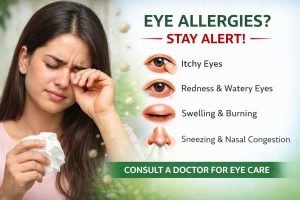
Eye allergy symptoms vary from mild to severe depending on exposure and sensitivity. The most common signs include itching, redness, watery eyes, burning sensation, swelling of the eyelids, sensitivity to light, and blurred vision. In some cases, people may experience sticky discharge or a feeling of dryness. Persistent symptoms indicate the need for proper eye allergy management.
Best Treatment for Eye Allergies to Reduce Symptoms
1. Avoiding Allergy Triggers
Reducing exposure to allergens is the first step in eye allergy control. Keeping windows closed during pollen season, using air purifiers, and maintaining eye hygiene help lower irritation.
2. Cold Compress Therapy
Applying a cold compress helps reduce swelling, redness, and itching by narrowing blood vessels around the eyes.
3. Antihistamine Eye Drops
These drops block histamine release and provide fast relief from itching and redness. They are widely used in eye allergy treatment.
4. Lubricating Artificial Tears
Artificial tears wash away allergens and soothe dry, irritated eyes naturally.
5. Prescription Eye Medications
For severe cases, doctors may recommend mast cell stabilizers or anti-inflammatory eye drops.
6. Oral Allergy Medicines
Oral antihistamines can help control eye and nasal allergy symptoms together.
7. Proper Contact Lens Care
Limiting contact lens use during allergy flare-ups reduces discomfort and infection risk.
8. Eye Hygiene and Cleaning
Washing hands frequently and avoiding eye rubbing prevents worsening symptoms.
9. Lifestyle and Diet Support
A healthy diet rich in omega-3 fatty acids and vitamin A supports eye health and immunity.
10. Professional Eye Consultation
Regular eye checkups ensure accurate diagnosis and long-term allergy prevention.
How to Protect Yourself From Eye Allergies
Preventing eye allergies involves simple daily habits. Wearing sunglasses outdoors, cleaning bedding regularly, avoiding smoke, removing makeup before sleep, and staying hydrated all help protect sensitive eyes. Managing indoor air quality and reducing screen exposure also play an important role in prevention.
Long-Term Problems If Eye Allergies Last Too Long
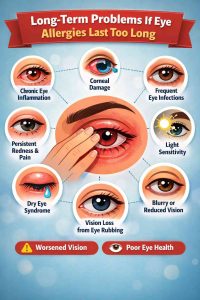
- Persistent ocular inflammation that may harm the tissues of the eyes
- Damage or thinning of the cornea as a result of persistent inflammation
- A higher chance of developing eye infections
- Diminished or blurry vision over time
- Tear imbalance leading to dry eye condition
- Light sensitivity (photophobia)
- Persistent redness and pain in the eyes
- Eye strain and trouble concentrating
- Vision deterioration brought on by continuous eye rubbing
- decreased visual quality and general eye health
Foods to Avoid for Eye Allergies
Eye allergies can become worse because of certain foods. Avoiding these foods may help reduce itching, redness, swelling, and watery eyes.
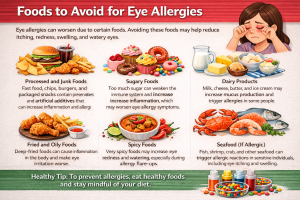
- Processed and Junk Foods
Preservatives and chemicals found in fast food, chips, burgers, and packaged food can exacerbate allergic reactions and inflammation.
- Sugary Foods
Too much sugar can weaken the immune system and increase inflammation, which may worsen eye allergy .
- Dairy Products
Milk, cheese, butter, and ice cream may increase mucus production and can trigger allergies in some people.
- Fried and Oily Foods
Deep-fried foods can cause inflammation in the body and make eye irritation worse.
- Spicy Foods
Very spicy foods may increase eye redness and watering, especially during allergy flare-ups.
- Seafood (If Allergic)
Fish, shrimp, crab, and other seafood can trigger allergic reactions in sensitive individuals, including eye itching and swelling.
- Alcohol and Caffeinated Drinks
Alcohol and excessive caffeine can dehydrate the body, making eye dryness and irritation worse.
- Artificial Food Colors and Preservatives
Foods with artificial colors, flavors, and preservatives may trigger allergic responses.
Tip:
To promote eye health, eat fresh produce, drink lots of water, and consume foods high in omega-3 fatty acids and vitamin A.


