
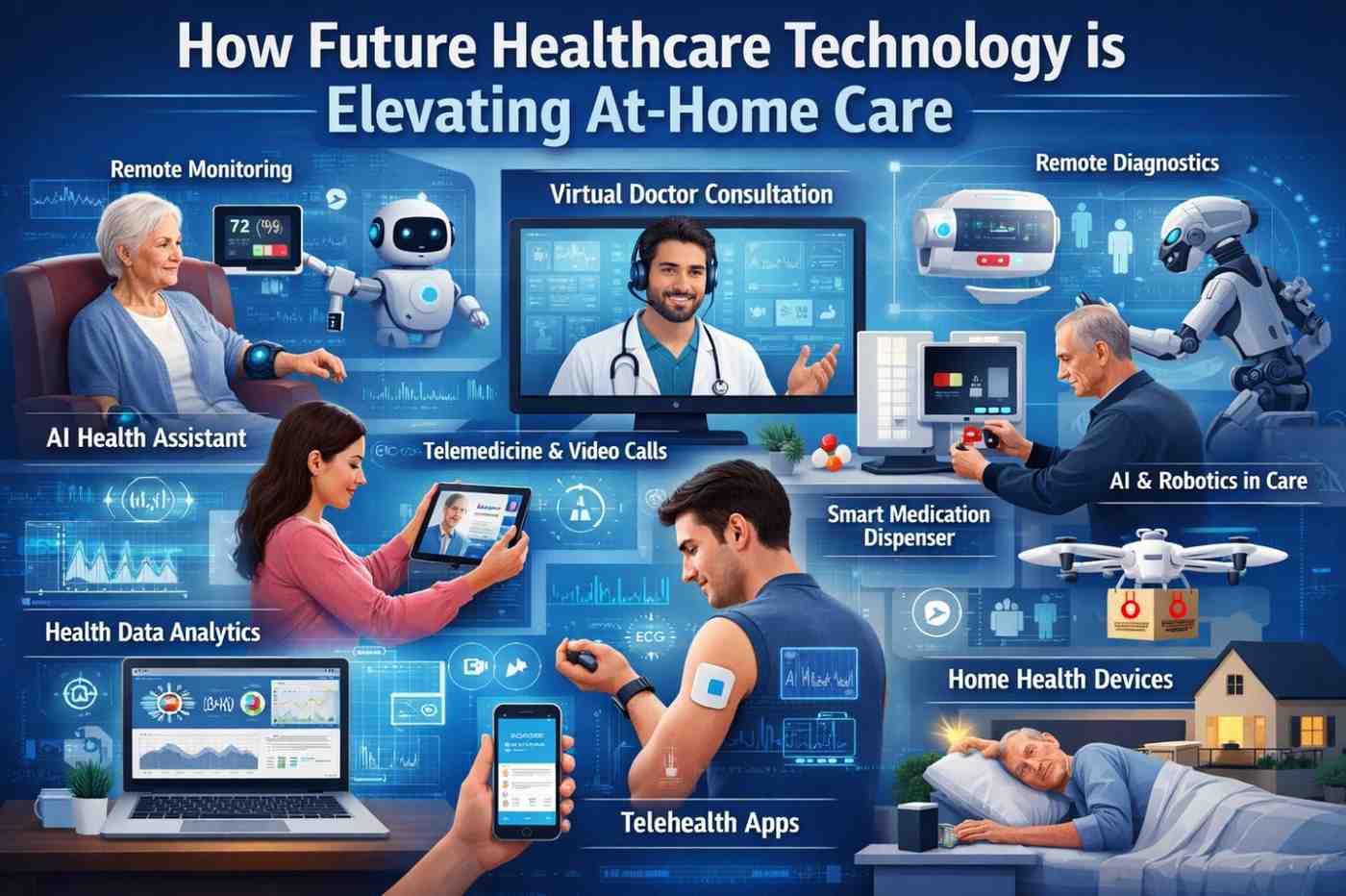
How future healthcare technology is elevating at-home care is becoming one of the most important discussions in modern medicine. Within the first decade of digital health growth, technology has shifted healthcare from hospitals to homes, making care more accessible, personalized, and cost-effective. At-home care now uses advanced digital tools, smart devices, and data-driven systems that allow patients to receive quality medical support without frequent hospital visits. This transformation improves comfort, reduces pressure on healthcare systems, and enhances patient outcomes across age groups.
The Role of Future Healthcare Technology in Improving At-Home Care
Future healthcare technology is redefining how care is delivered at home. Digital health platforms, connected medical devices, artificial intelligence, and cloud-based systems work together to provide continuous care outside clinical settings. Patients can now monitor vital signs, consult doctors remotely, and manage chronic conditions from their living rooms. This shift supports preventive care, early diagnosis, and timely intervention while maintaining professional medical standards.
Smart Healthcare Technologies Fueling Growth in At-Home Services
Several technologies are playing a major role in improving at-home healthcare. Remote monitoring tools, telemedicine platforms, wearable devices, AI-powered analytics, and smart home systems collectively create a connected care environment. These innovations reduce hospital dependency and empower patients to take control of their health.
The Importance of Remote Patient Monitoring in Modern At-Home Care
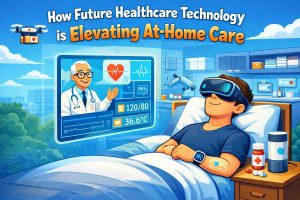
Remote Patient Monitoring (RPM) is a technology that collects patient health data using connected devices and transmits it securely to healthcare providers. These devices track vital signs such as heart rate, blood pressure, oxygen levels, glucose levels, and body temperature. Doctors can review real-time data, identify health risks early, and adjust treatment plans without requiring in-person visits.
RPM is especially effective for chronic disease management, post-surgery recovery, and elderly care. It reduces emergency admissions, improves treatment accuracy, and allows patients to stay safely at home while remaining under professional supervision.
How Virtual Care Is Redefining the Future of At-Home Healthcare
Telemedicine has become a cornerstone of at-home care. Through video consultations, phone calls, and secure messaging platforms, patients can connect with doctors anytime. Telemedicine saves time, lowers travel costs, and increases access to specialists.
In the future, telemedicine will integrate more deeply with electronic health records, AI triage systems, and diagnostic tools. This will make virtual consultations more accurate and efficient, ensuring that patients receive timely and reliable medical advice from home.
How Smart Wearable Devices Simplify Health Monitoring at Home
Fitness trackers, watches, and medical wearables are examples of smart wearables that are essential to at-home healthcare. These gadgets track stress levels, heart rhythm, sleep patterns, and physical activity continuously. Advanced wearables are able to identify abnormal vital signs, falls, and irregular heartbeats.
By sharing real-time data with healthcare providers, wearables enable early intervention and personalized care plans. They also encourage patients to maintain healthy habits and stay engaged in their own healthcare journey.
The Role of AI and Machine Learning in At-Home Healthcare Accuracy
Artificial Intelligence and Machine Learning are making at-home healthcare more precise and predictive. AI algorithms analyze large volumes of patient data to identify patterns, predict disease progression, and recommend personalized treatments.
In at-home care, AI supports symptom checking, medication reminders, virtual health assistants, and automated alerts for abnormal readings. These technologies reduce human error, improve diagnosis accuracy, and help healthcare professionals focus on critical cases.
10 Benefits of Future Home Healthcare Technology for Elderly Patients
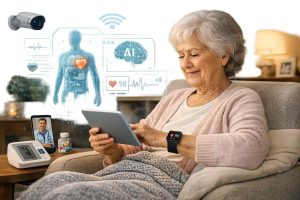
Improved Health Monitoring
Smart devices help track vital signs like heart rate, blood pressure, and oxygen levels in real time.Remote Medical Support
Telemedicine allows elderly patients to consult doctors from home without frequent hospital visits.Early Disease Detection
AI-powered health systems can detect health issues early, reducing serious complications.Increased Safety at Home
Smart sensors and alert systems help prevent falls and emergencies.Better Chronic Disease Management
Digital health tools support daily care for diabetes, heart disease, and arthritis.Personalized Care Plans
Data-driven technology helps create customized treatment plans based on patient needs.Reduced Healthcare Costs
At-home care technology lowers hospital bills and travel expenses.Medication Reminders
Smart apps and devices ensure timely medicine intake and reduce missed doses.Enhanced Independence
Elderly patients can live more comfortably and confidently in their own homes.Improved Quality of Life
Continuous care, comfort, and emotional well-being lead to healthier aging.
Major Advantages of Technology-Driven At-Home Care
Technology-enabled at-home care provides several key advantages. It increases convenience, reduces healthcare costs, and minimizes hospital overcrowding. Patients receive personalized care in familiar environments, leading to better comfort and recovery.
Additionally, continuous monitoring improves preventive care and early diagnosis. This approach enhances overall healthcare efficiency while maintaining high standards of quality and safety.
Will At-Home Care Reduce Dependence on Hospitals in the Future?
At-home care technology is expected to significantly reduce dependence on hospitals, especially for non-emergency and long-term care. While hospitals will remain essential for critical treatments and surgeries, many routine services can be safely delivered at home.
This shift allows hospitals to focus on complex cases while improving healthcare system sustainability and accessibility.
Effectiveness of Digital Health Technology in Chronic Disease Management
Digital health technology is highly effective in managing long-term conditions such as diabetes, heart disease, asthma, and hypertension. Continuous monitoring, digital coaching, and personalized treatment plans help patients maintain stable health.
By reducing complications and hospital admissions, digital health tools improve quality of life and long-term outcomes for chronic patients.
How Smart Home Devices Enhance Patient Safety
Smart home devices contribute to patient safety by creating a supportive home environment. Sensors can detect movement, falls, and environmental hazards such as smoke or gas leaks. Automated lighting and temperature control reduce accident risks.
These systems work seamlessly with healthcare platforms to provide instant alerts and emergency responses when needed.
Importance of Data Security in Future Healthcare Technology
Data security is a critical aspect of future healthcare technology. At-home care relies heavily on digital data, making privacy protection essential. Secure encryption, authentication systems, and regulatory compliance ensure patient information remains safe.
Trust in digital healthcare systems depends on strong cybersecurity measures and transparent data handling practices.
Role of Technology in Improving At-Home Care in Rural Areas
Technology plays a vital role in improving at-home care in rural areas, where access to hospitals and specialists is often limited. Digital health tools such as telemedicine platforms allow patients to consult doctors remotely, reducing long travel times and healthcare costs.
Remote patient monitoring devices help track vital signs like blood pressure, heart rate, and glucose levels, enabling early detection of health problems. Smart wearable devices and mobile health apps support daily health management and encourage patients to stay engaged in their own care. Artificial intelligence and data analytics also assist healthcare providers by offering accurate insights and personalized treatment plans. Reliable internet connectivity and cloud-based health records make it easier for rural clinics to share patient data securely and improve coordination of care. These innovations enhance patient safety, increase treatment accuracy, and support elderly and chronic patients at home. Overall, how future healthcare technology is elevating at-home care becomes especially important in rural communities by bridging healthcare gaps, improving quality of life, and ensuring timely medical support without the need for frequent hospital visits.
This improves healthcare equity, early diagnosis, and treatment continuity for underserved populations.
How Nursing and Home Care Services Will Evolve with Technology
Nursing and home care services are adapting to digital transformation. Nurses use mobile apps, remote monitoring dashboards, and AI tools to manage multiple patients efficiently.
Technology enhances care coordination, reduces workload, and allows healthcare professionals to focus more on patient interaction and quality care.
Limitations and Challenges of At-Home Healthcare Technology
Despite its benefits, at-home healthcare technology faces challenges. Technical issues, digital literacy gaps, internet access limitations, and data privacy concerns remain barriers.
Addressing these challenges requires investment in infrastructure, training, and supportive policies to ensure inclusive and effective adoption.
Conclusion: The Future of At-Home Care

As healthcare continues to evolve, how future healthcare technology is elevating at-home care will become a major part of modern medicine. Innovations like telemedicine, remote patient monitoring, and smart wearable devices are making it easier for patients to receive high-quality medical support without leaving their homes. These technologies enable doctors to track vital signs, manage chronic diseases, and offer virtual consultations, improving patient safety and reducing hospital visits. AI and data analytics also help healthcare providers make faster and more accurate decisions, leading to personalized treatment plans and better health outcomes.
In rural areas and for elderly patients, digital health solutions can bridge the gap between limited medical access and timely care. Overall, the future of at-home care promises more convenience, cost savings, and better patient engagement. With ongoing advancements in digital health and smart medical devices, at-home healthcare will continue to grow, offering a safer, more comfortable, and more efficient way to manage health. The future is clearly moving toward a more connected and patient-centered care system, where home becomes the primary place for healing and support.


